
Before we explore the future of online business, it is important to understand that digital marketing has become one of the most powerful forces.
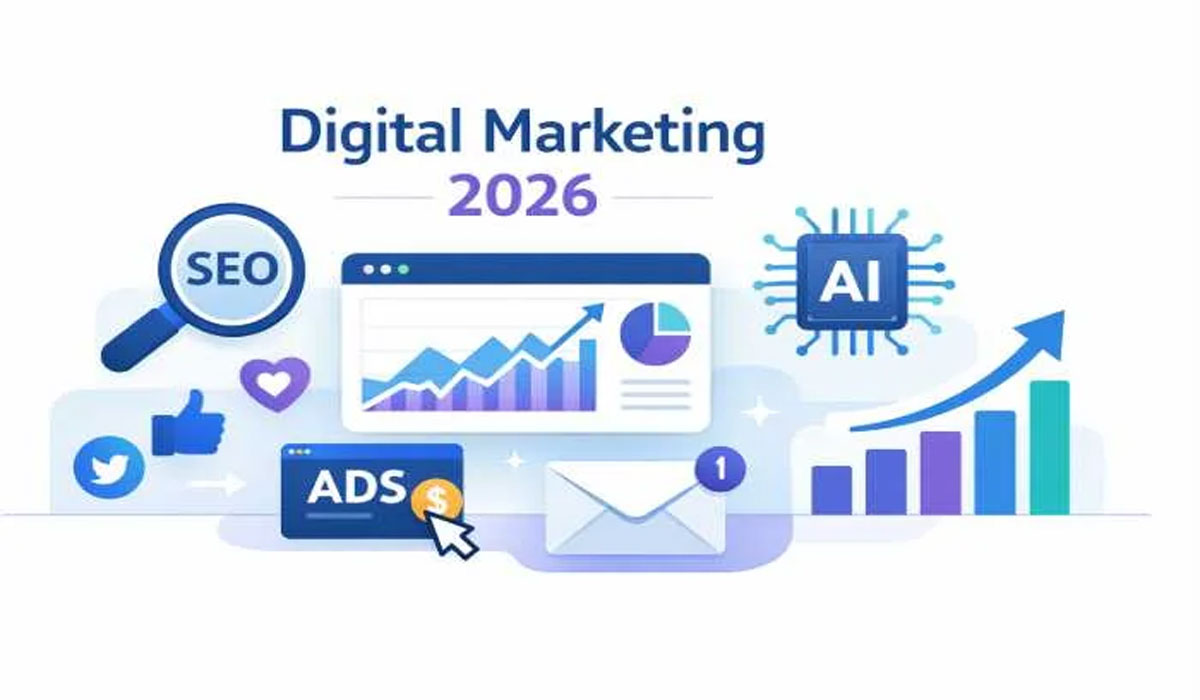
It influences what people see, what they buy, and even how they think about brands in their daily lives. What once started as simple online advertising has now evolved into a global system driven by data, automation, and human behavior. In 2026, digital marketing is no longer just an option for businesses.
It is a necessity for survival in an increasingly competitive digital economy. Every brand, from small startups to global corporations, relies on digital platforms to reach audiences and grow revenue. WikiTribune | First Class Online Web Por This article explores how digital marketing is transforming the internet in 2026. It reveals the strategies, technologies, and psychological methods behind this powerful system that continues to reshape the online world.
The Rise of AI-Powered Marketing Systems
Artificial intelligence has become the backbone of modern digital marketing. In 2026, most marketing campaigns are no longer fully managed by humans. Instead, AI systems analyze data, predict user behavior, and automatically optimize advertising strategies in real time.
These systems can process massive amounts of information within seconds. They track user interactions, browsing habits, and purchasing patterns to deliver highly personalized content. This level of precision allows businesses to reach the right audience at the right time.
As a result, marketing efficiency has increased dramatically. Companies spend less money while achieving higher conversion rates. However, this also raises concerns about privacy and the increasing dependence on automated decision-making systems.
Social Media as the New Global Marketplace
Social media platforms have evolved far beyond communication tools. In 2026, they function as fully integrated marketplaces where users can discover, evaluate, and purchase products without leaving the app.
Platforms like Instagram, TikTok, and emerging decentralized networks have transformed into powerful sales engines. Influencers, brands, and even AI-generated content creators play a major role in shaping consumer decisions.
This shift has changed the traditional shopping experience. Instead of visiting physical stores or websites, users now rely on short videos, live streams, and interactive content to make purchasing decisions instantly.
Also Read: Shocking Collaboration: Banks Join Forces With Schools To Boost Innovation
The Power of Data and Behavioral Targeting
Data has become the most valuable asset in digital marketing. Every click, search, and interaction generates information that helps businesses understand their customers better than ever before.
In 2026, behavioral targeting allows advertisers to predict what users want before they even search for it. This is achieved by analyzing patterns across multiple devices and platforms, creating a detailed digital profile for each user.
While this improves personalization, it also raises ethical questions. Many users are unaware of how much data is being collected and how it is being used to influence their decisions.
Content Creation and the Era of Hyper-Personalization
Content remains at the heart of digital marketing, but its form has changed significantly. In 2026, content is no longer generic. It is hyper-personalized, adapting in real time to each individual viewer.
AI tools now generate videos, articles, and advertisements tailored to specific interests, locations, and behaviors. This ensures that every user sees content that feels uniquely relevant to them.
As a result, engagement levels have increased, but competition among brands has also intensified. Only the most adaptive and creative companies can stand out in this highly personalized digital environment.
Conclusion
Digital marketing in 2026 has transformed the internet into a highly intelligent, data-driven ecosystem. With the rise of artificial intelligence, social media commerce, behavioral targeting, and hyper-personalized content, businesses now operate in a world where every interaction matters.
While these advancements bring efficiency and growth, they also introduce new challenges related to privacy, ethics, and digital responsibility. Understanding this evolving landscape is essential for anyone who wants to succeed in the modern digital economy.
Image Source:
- First Image from tekno.kompas.com
- Second Image from vietnam.vn
